
How to Choose Pneumatic Fittings in The Greatest Way ?
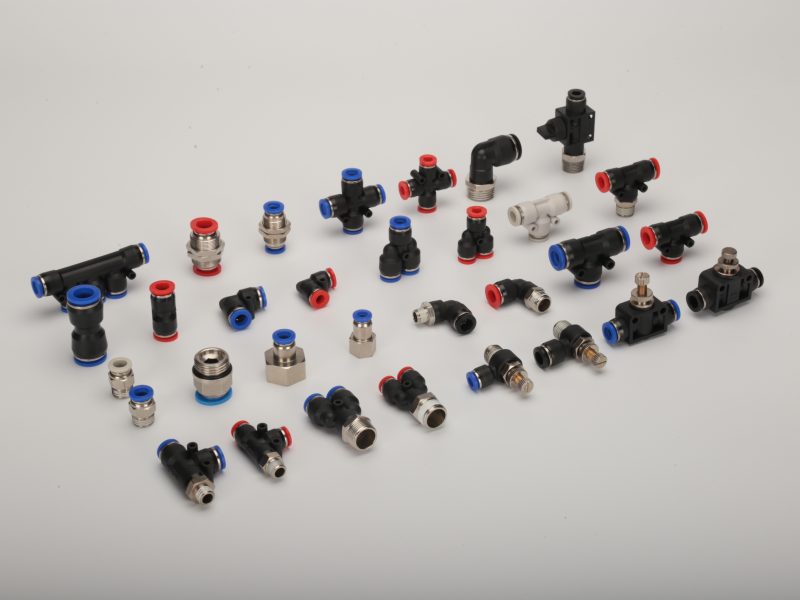
Pneumatic fittings, together with pipes, form the link between all components and can have a significant impact on the system’s safety, efficiency, and energy consumption. Fittings can include anywhere from one to six inlet/outlet ports, as well as additional features like a pneumatic silencer or a pressure gauge.
Applications
Push-in fittings are utilized in various types of compressed air systems, and they’re most popular in pneumatic tool, cylinder, and equipment applications. They can be utilized in water applications, but certain precautions must be taken (controlled surge pressure, water compatibility, insert ring and so on). The push-on connection method allows for quick component swapping, which is great if you have a single air supply for numerous tools that can be swapped out.
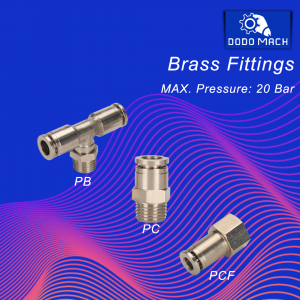
Pushing through a grab ring or collet secures the pipe, which normally has an outside diameter of 4 to 16 mm, and releases it with ease; the pressure rating of plastic fittings is approximately 10 bar while that of brass fittings is 20 bar. There are various variations in miniature, stainless steel, and for specialized uses such commercial vehicles and food.
What shapes are available?
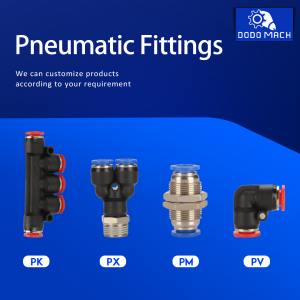
There are shapes available to make sure pneumatic systems may be built successfully. Tees and crosses can split or combine flows, whereas elbows allow flow changes without running the danger of kinking the piping. Different adaptors and unions can change the pipe’s diameter or guarantee a perfect transition from one fitting to another. Pipework can run through machine constructions without making energy-draining detours thanks to bulkhead fittings.
How to install and uninstall pneumatic push-in fittings
Pushing the hose into the release ring-end of the fitting until it stops is all that is needed to install it. For a quick and secure connection, the internal lock claws will automatically clamp around the hose.
To release the lock claws and remove the tubing, push the release ring inward in the direction of the fitting. Another connector fitting, a threaded male, a threaded female, or a threaded male with an inner hex-type connection are all possible for the opposite end. Typically, a thread lock coating has been pre-applied to the threaded connections. What is more, the tube must be fuller inserted for a proper seal.
What are the considerations in choosing pneumatic fittings?
As a general guideline, keeping the piping as simple as feasible can minimise energy loss through the system. For example, don’t use elbow type if straight runs is possible. Piping and pneumatic fittings should be constructed to provide the necessary flow without creating large pressure drops. When picking the ideal fitting type, the following factors should be taken into account:
1.Working pressure;
2.Working environment: Both potential contaminants and accessibility for construction and maintenance;
3.Working temperature: The working pressure of nylon and polyurethane tubes will decrease as the temperature rises;
4.All necessary application permissions, such as those for use in the food industry.
Combinations of functions
Additional advantages of push-in fittings may be beneficial to your application. The following are some examples of additional functional combinations:
1.Use a pressure regulator to keep the line pressure in check.
2.Use a pressure gauge to read the line pressure.
3.Use a flow control silencer to reduce the speed of pneumatic cylinders by choking one channel of flow and muffle the sound.
4.Use a check valve to set one-way flow.
The advantages and disadvantages of using push-in fittings
Advantages: Push-in fittings have a rapid release system that makes it possible to install them by hand quickly and easily without the use of any tools or adhesive. It enables regular replacing of air lines at a low cost due to the simplicity of connecting and disconnecting air lines. To achieve the required result, push-in fittings are available in a variety of tube sizes, couplings, and thread combinations.
Disadvantages: To prevent being harmed by the internal claws, push-in fittings require stiffer tubing with tougher walls. It’s possible that firm tubing won’t work well in systems where hoses must be routed around tight curves because it will be less flexible. We advise using hose tail barbed connectors rather than push-in fittings if flexible tubing is necessary. Push-in fittings work best with nylon, polyethylene, or polyurethane tubing. It can be used for water applications but is more effective for pneumatic ones.
At the end, if you have any question about our pneumatic fittings or other pneumatic products, just feel free to contact us for more information.
You can view and learn more about our products through our official website.