
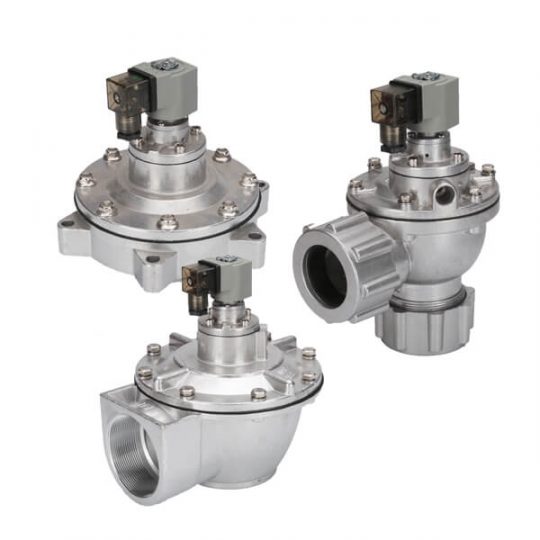
What Is a Pulse Solenoid Valve and How They Work?
The Pulse valve is a key electromagnetic component in an industrial dust removal system, mainly used for automatically cleaning the filter bag or cartridge. It consists of an electromagnetic coil, valve body and diaphragm, which instantly opens by receiving an electric control signal and releases compressed air to form strong blowing airflow. This high-pressure reverse airflow can effectively strip dust accumulated on the surface of the filter material and maintain the smoothness of the filtration system, thus stabilizing the system pressure difference, reducing energy consumption, and significantly extending the service life of the filter element.
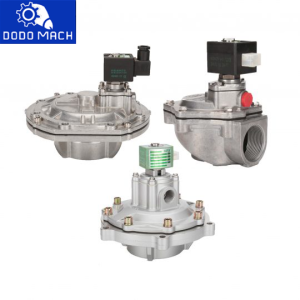
Pulse Valve Design
Body: The main structure of the pulse valve is made of aluminum alloy or stainless steel and other high-strength materials to provide reliable support for the internal functional components.
Diaphragm: The pulse valve adopts a flexible diaphragm structure, through its up and down displacement to realize the isolation control of the air supply channel and outlet, and complete the opening and closing action of the valve.
Solenoid coil:Electromagnetic force is generated by the energized coil, which directly drives the diaphragm to execute the opening and closing actions of the valve.
Pilot valve: Accurately regulates the air pressure in the diaphragm chamber through the miniature pneumatic valve to assist the main valve operation.
Spring: After a power failure, the reset mechanism returns the diaphragm to the initial state.
Orifice: The structural size of the blowing orifice directly determines the flow rate and pressure characteristics of the pulse airflow.
Ports: Adopting a dual-channel interface design, it contains an independent air input port and pulse output port, which are connected to the compressed air system and to the filtration device, respectively.
Pulse Valve Operating Principle
Solenoid energization: When the pulse valve is started, the solenoid valve is energized to trigger the working cycle. This action causes the compressed air in the upper chamber of the diaphragm inside the valve body to rapidly discharged.
Diaphragm opening: When the trapped air is discharged, a significant pressure difference is formed on both sides of the diaphragm. This pressure difference drives the diaphragm to displace rapidly, thus opening the valve channel and realizing the clean injection of compressed air.
Solenoid de-energization: After the solenoid valve is powered off, the air flows back to the upper chamber of the diaphragm through the throttling holes, so that the pressure on both sides of the balance is restored.
Valve closure: The pressure balance prompts the diaphragm to reset, realizing instantaneous valve closure. This quick sealing mechanism effectively prevents gas leakage and ensures the shortness and impact of the pulse blowing.
Rapid Actuation: The core of pulse valve performance optimization lies in achieving quick opening and closing actions. Through the use of lightweight diaphragm and other low inertia design, significantly improves the valve response speed, to ensure efficient cleaning while reducing compressed air consumption.
Achieving maximum flow rate: The valve maximizes flow when the air velocity reaches the speed of sound (344 m/s). This design ensures optimal system performance, delivering excellent soot removal.
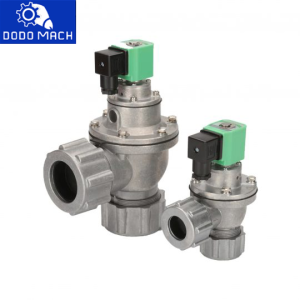
Pulse Valve Applications
Pneumatic conveying systems: A Pneumatic pulse valve optimizes the material conveying efficiency by precisely controlling the airflow pulse.
Air filtration systems: The pulse ash cleaning system efficiently removes the dust accumulated in the filter media, ensuring the air quality meets the standard.
Powder coating processes: The pulse valve precisely regulates the powder spraying, realizing uniform coating on the surface.
Grain and feed processing: The pulse valve efficiently maintains the cleanliness of the filter element and guarantees the smooth operation of the system.
Cement production: The pulse valve efficiently removes the dust accumulated on the filter media and guarantees the continuous and stable operation of the equipment.
Foundry operations: The Pulse valve effectively removes particles from the filtration system to maintain a clean working environment.
Pharmaceutical manufacturing: Pulse valves ensure efficient air purification and are a key component in maintaining a sterile environment.
Chemical processing: Pulse valves effectively block dust buildup and ensure the safe operation of the filtration system.
Woodworking facilities: Pulse valves efficiently remove wood dust, safeguarding equipment and personnel.
Metalworking and machining: Pulse valves efficiently filter out metal particles, preventing machine breakdowns and occupational health risks.
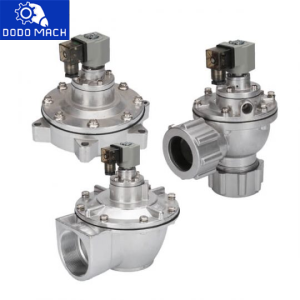
Selection Criteria
Tank volume: The volume of the storage tank directly affects the valve selection, high-volume systems need to be configured with high-flow valves to ensure the efficiency of ash removal.
Tank pressure: The valve inlet pressure depends on the tank pressure, which is the key parameter to ensure the matching operation of the system.
Max allowable pressure: The rated pressure resistance value of the valve determines the maximum pipeline pressure it can withstand, to ensure operational safety and structural reliability.
Electrical pulse length: Pulse duration directly affects energy consumption, and cleaning effect: short pulse saves energy, long pulse enhances cleaning efficiency.
Total pulse length: The length of valve opening and closing cycle directly affects the cleaning effect, and its optimal value should be dynamically adjusted according to the system working conditions.
Peak pressure: Peak pulse pressure generates a strong cleaning shock wave, effectively stripping the surface of the filter material of adhering particles.
Pressure drop tank: The stable operation of the sonic airflow requires the pressure drop to be controlled within 50% of the absolute pressure of the air tank to guarantee the system circulation efficiency.
Performance ratio: The performance ratio (tank pressure to peak pressure) is regulated by the valve Kv value (flow coefficient) and the opening and closing time, and the improvement of the ratio directly reflects the optimization of energy efficiency.
Volume per pulse: The pulse air volume directly affects the dust cleaning effect, and adequate airflow supply is the key parameter to ensure efficient dust removal.
Material of construction: Valve body and seal materials are selected to ensure media compatibility. Typical configurations include aluminum/stainless steel construction and Nitrile rubber seals, optimized for media characteristics to ensure long-term reliability.