
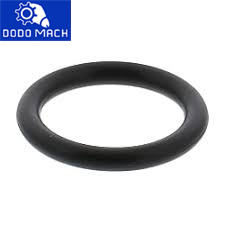
What Is an O-ring?
An O-ring is an annular sealing element mainly used as a leak-proof seal between mechanical components. Its working principle is to produce a tight sealing effect between contact surfaces by being installed in a groove and subjected to compression deformation during assembly. Due to their simple structure, low cost, and easy installation, O-rings are widely used in mechanical engineering. In this article, we will analyze its basic concept, sealing mechanism, and common types in detail to help readers deeply understand its functional characteristics.
What is an O-ring
O-rings, as key sealing elements, are ring-shaped structures made of elastomeric materials for static and dynamic sealing scenarios. Their central role is to provide reliable sealing solutions for pipe connections, piston cylinder assemblies, and more.
Depending on the conditions, these seals can be customized with a wide range of elastomers to meet the needs of different environments while maintaining excellent flexibility. They are used in a wide range of applications, from hydraulics and pneumatics to automotive powertrain and aerospace equipment, among other key industrial scenarios.
Thanks to their unique elastic properties, the seals maintain a stable geometry and sealing performance even after long-term cyclic compression loads, ensuring long-lasting, reliable system operation.
Working principle
An O-ring sealing system consists primarily of an elastomeric sealing ring and its accompanying mounting structure. The mounting structure is typically a precision-machined, annular groove in a metal or plastic component (such as a valve or cylinder body) that is used to accurately position and secure the sealing element. When the two mating components are assembled, the ring seal placed in the groove compresses and deforms moderately, creating an effective sealing barrier at the contact interface.
This design ensures that the sealing element is always in the optimal working position and reliably blocks the leakage path of fluid media, both liquid and gaseous substances. The geometrical accuracy of the mounting channel is decisive for sealing performance, and its dimensional tolerances need to be precisely matched to the compression rate of the seal.
- O-Rings deform elastically under pressure, and the material is able to fill microscopic gaps and surface irregularities between mating surfaces. This characteristic enables them to maintain an effective fluid barrier under extreme pressure conditions, whether high pressure or vacuum.
- The elastomeric materials used give the sealing element excellent shape memory. When the external load is lifted, the sealing body is able to recover its initial geometric shape, ensuring the integrity of the sealing interface. This self-recovering feature not only extends the service life of the seal. but also enables it to adapt to the requirements of cyclical pressure changes.
Advantages
O-rings as industrial sealing solutions demonstrate excellent suitability and technical advantages. Its core value is reflected in the following aspect:
1.Excellent sealing performance
Adapt to a wide range of operating conditions (pressure fluctuations, temperature changes, and dimensional tolerances)
Maintain a stable sealing effect, effectively preventing media leakage
Suitable for dynamic and static sealing scenarios
2.Operation and maintenance advantages
Easy installation, no special tools required
No risk of damage to mating surfaces
Reusable in most cases
Small size, lightweight and space-saving
3.Economy and reliability
Cost-effective with low maintenance costs
Easy diagnosis due to progressive failure modes
Easy management of spare parts (stocking common specifications is recommended)
In industrial applications, the wear and tear of seals directly affects the efficiency of equipment. It is recommended to establish a comprehensive spare parts inventory system to ensure timely replacement. O-rings are usually categorized and selected according to application scenarios and material properties.
O-ring materials
The sealing performance of O-Rings in high-pressure environments is due to their unique deformation properties. When system pressure is applied to the seal, a uniform stress distribution is formed on the contact surface. To ensure sealing reliability, the working pressure must be strictly controlled so as not to exceed the stress limit of the material, which is the basic prerequisite for preventing medium leakage.
However, under extreme operating conditions, mechanical failure can lead to extrusion damage of the seal. In response to this risk, engineering practice needs to be based on the specific application conditions of selected materials. Modern sealing technology uses advanced material systems such as specialty rubbers, modified silicones, and high-performance polymers, which are selected based on their key properties – excellent elastic recovery and mechanical strength – which are decisive for ensuring the long-term stability of seals under severe operating conditions.
FKM (Viton)
Excellent chemical stability and mechanical properties
Temperature range: -10°C to 120°C
Compatible with aliphatic/aromatic compounds, halogenated hydrocarbons, and various oils
Limitations: poor methanol compatibility, swelling at high temperatures in water, and not suitable for polar solvents
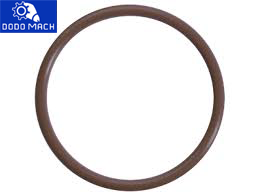
EPDM (Ethylene Propylene Diene Monomer)
Ideal for water/steam and ketone media
Excellent weathering and ozone resistance
Limitations: Significant performance degradation in oil and aromatic hydrocarbon environments
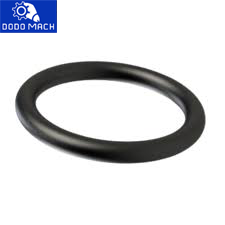
NBR (Nitrile Butadiene Rubber)
Excellent mechanical strength and wear resistance
Widely used in oil and alcohol media
Caution: limited environmental resistance, brake fluid prohibited.
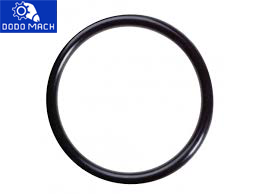
PTFE (Polytetrafluoroethylene)
Extraordinary chemical inertness
Wide temperature range: -20°C to 180°C
Characteristics: high stiffness for excellent wear resistance, but not enough elasticity
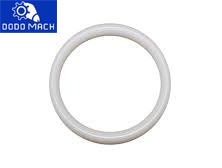
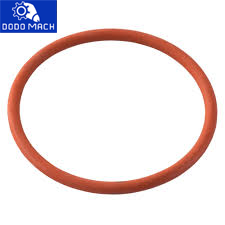
Silicone
Extreme temperature adaptability (standard: -60°C to 225°C)
Maintains resilience at low temperatures
Specialized models can withstand harsh environments from -100°C to 300°C
Applications
O-rings have become a key component in cross-industry applications due to their excellent sealing properties and adaptability. Their main areas of application include:
Aerospace and aviation: aero-engine sealing systems, aircraft hydraulic transmissions
Medical devices: Medical Injection Devices, Precision Infusion Control Systems
Plumbing: Pipe connection parts, fluid control valve sets
Hydraulics and pneumatics: Pneumatic/hydraulic actuators, reciprocating assembly seals
Food and beverage processing: Sanitary production equipment, aseptic packaging machinery
Electronics: Precision connector protection, dustproof structure for electronic equipment
Common household applications: Household sealing systems, containers with airtight construction