
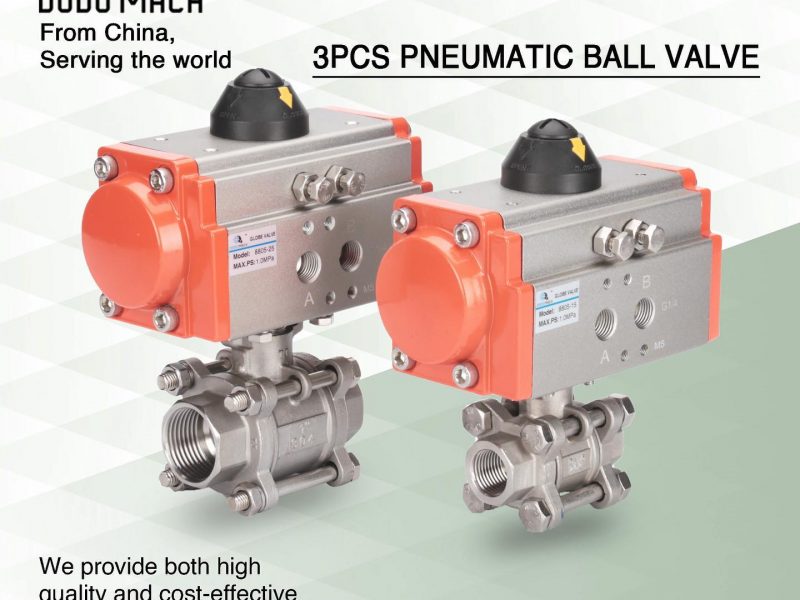
1 Quick Guideline of Ball Valve
When you choose to buy ball valve parts, there are many things to consider. You need to have a good grasp of the ball valve, so you must learn and train each part and understand the valve replacement parts in depth to find the right ball valve for your system hardware. We have collected in this article all the necessary information you must know about the relevant valve parts. So read on and enjoy a relaxing and enjoyable learning session.
Here we take a look at how ball valve parts manufacturers combine different ball valve components to help us better control the flow of the our operating system.
Common materials for ball valve parts
Ball valves should be designed and manufactured with durable materials that can withstand different environmental factors, such as different temperatures and different pressures. And ball valve parts are commonly used in brass, stainless steel, bronze, chromium, titanium, Teflon,PVC, CPVC and so on.
Advantages and disadvantages of ball valve
Ball valves are cheaper when you compare it with other valves. Furthermore, they require less maintenance and lower maintenance fees. Another strong point of ball valve is its compact structure, tight sealing, and small torque, and its fast on or off operation is also worth mentioning. And no lubrication needed!
But every good piece of equipment has its drawbacks, as do ball valves. Traditional ball valves have poor throttling characteristics, seat will be corroded rapidly by the the impingement high-speed flow.
The valve body
The valve body is one of the main components of the ball valve, which is a housing that keeps all the units of the valve together and helps them merge together. In addition, it will go some way towards protecting all units from external threats and dangers. This framework also acts as a pressure boundary for the valve when it comes to protecting the internal unit from liquid volume and pressure damage to these parts in it.
The ball
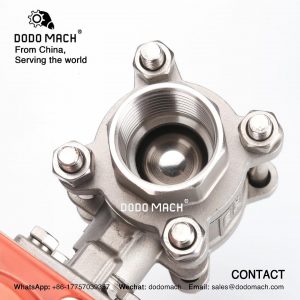
A ball is another part of the whole valve, which is shaped like a sphere and contains a flow pipeline in its center, the pipeline is also called as a tunnel or hole. The ball has an axle junction that permits the ball to rotate.
The bonnet
You can see the bonnet in the opening place of the body of ball valve. The bonnet is used to cover the opening place, and as same as the shell, acting as a pressure boundary in the second stage. The bonnet secures the ball and stem assembly in place and the cap is fixed to the body to perform this task.
By the correct adjustment of the device, the correct compression of the packing can be achieved, thus providing stem seal. Manufacturers usually use the identical material as the housing or body to make bonnets. It makes the valve firmer and stronger when the bonnet is bolted together with its valve body.
The trim
Diverse ball valve parts create up the trim together.These parts include disk, sleeves, seat which also known as seals and stem. The trim enables the valve to perform basic movements and provides flow control. In many designs, disks are considered pressure boundaries in the third stage, just like the shell in the first stage and the bonnet in the second. The disc can retain pressure to prevent or permit the flow of fluids.
In Trim, the seat, together with the disk, can determine the performance of the ball valve system. The seat works like an interface that shows where the disc is, and it’s designed in two ways. Manufacturers either forge seats inside the body or machine weld the seats.
Stems have a rectangular section at the ball end normally. By turning the stem, it allows the ball to rotate. The stem is also responsible for connecting the actuator and the disk through welded connectors and helps locate the disk.
The actuator
The actuator runs the stem and disk, which are two sections of the trim. There are a variety of actuators that you can choose according to your operational needs. Different actuator designs include: handwheel, lever, solenoid, motor, hydraulic arm or pneumatic operator. The most common design is that the drive will be fitted through a yoke with a bonnet.
At length, if you have any question about these or other pneumatic components, just feel free to contact us.
You can view and learn more about our products through our official website.