
How Pneumatic Cylinders Work and What You Need to Know
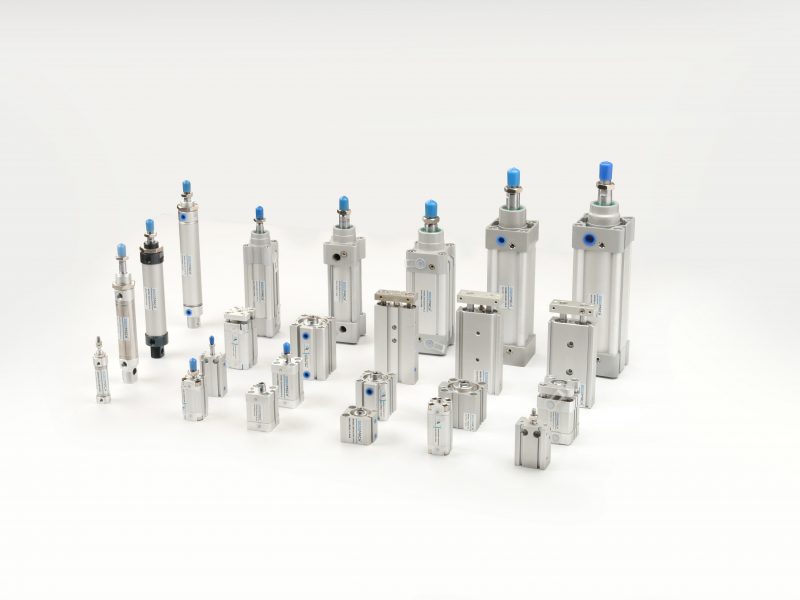
A pneumatic cylinder is a mechanical equipment that transfers the energy of compressed air into a linear reciprocating motion. Compressed air is used to propel a piston in and out in a double-acting cylinder, whereas a single-acting cylinder employs compressed air for one-way movement. They have a variety of accessories, such as sensors to detect the piston’s position and various mounting accessories to mount the cylinder or add components to the piston’s end. Pneumatic cylinders are used in a wide range of sectors that require linear motion because they are simple to use and cost-effective. Air cylinders are another name for them.
Type of cylinder
①Single-acting cylinder: There is only one end of the piston rod, the gas is supplied from the side of the piston to generate air pressure, and the air pressure pushes the piston to generate thrust to extend, and returns by spring or its own weight.
②Double-acting cylinder: Alternately supply air from both sides of the piston to output force in one or two directions.
③Diaphragm type cylinder: The diaphragm is used instead of the piston, the force is output in only one direction, and the spring is used for reset. It has good sealing performance but short stroke.
④ Impact cylinder: This is a new type of element. It converts the pressure energy of the compressed gas into the kinetic energy of the high-speed (10-20 m/s) motion of the piston to perform work.
⑤Rodless cylinder: The general term for cylinders without piston rods. There are two types, magnetic cylinders and cable cylinders.
Standard of cylinder
Pneumatic cylinders are often designed to ISO standards, making them interchangeable with goods from various manufacturers. As a result, cylinder bore, stroke, piston rod properties, mounting dimensions, and air ports are all affected by the type/standard and application. Nevertheless there are a plethora of non-standard cylinders available for specific needs.
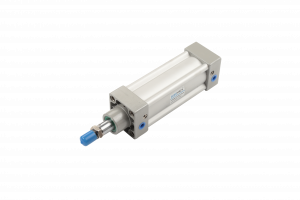
Profile ISO 15552 (32-320 mm)
For single or double rod pneumatic cylinders with a maximum operating pressure of up to 10 bar and bore sizes ranging from 32 mm to 320 mm, ISO 15552 specifies metric cylinder bore, stroke, piston rod properties, mounting dimensions, and air ports. Cylinders with detachable mountings are covered under this standard. VDMA 24562 is a standard for profile and tie-rod cylinders in Germany.
Adjustable cushioning is included in the ISO 15552 pneumatic cylinder series, which aids in achieving ideal dampening. As a result, ISO 15552 cylinders are ideal for moving high weights efficiently. They’re commonly found in general automation systems. The earlier ISO 6431 and VDMA 24562 standards have been replaced by ISO 15552.
Round ISO 6432 (8-25 mm)
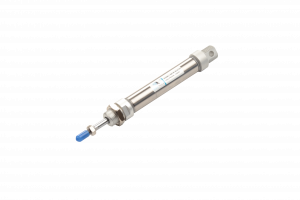
ISO 6432 is a metric ISO standard that covers single rod pneumatic cylinders with bores ranging from 8 to 25 mm and a maximum working pressure of 10 bar. Mini air cylinders or round cylinders are frequent names for them. This standard provides a metric set of mounting dimensions that are required for cylinder interchangeability. Manual damping adjustment is not available on this pneumatic cylinder standard.
The ISO 6432 compact cylinder line is ideal for automation systems in bottling, diagnostic instrumentation, auto industry, commercial cooking equipment and so on.
Compact ISO 21287 (20-100 mm)
Single rod compact pneumatic cylinders with a maximal working pressure of up to 10 bar and bore sizes ranging from 20 mm to 100 mm are covered by ISO 21287. The cushioning on this pneumatic cylinder series is not adjustable. Cushioning is provided by rubber bumpers on both ends. The ISO 21287 pneumatic cylinder series is small and light, making it ideal for applications with limited space.
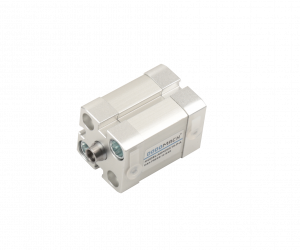
Cylinder structure
(1) Cylinder barrel
The inner diameter of the cylinder barrel represents the output force of the cylinder. The piston should slide smoothly back and forth in the cylinder, and the surface roughness of the inner surface of the cylinder should reach Ra0.8μm.
(2) End cap
The end caps are provided with inlet and exhaust ports, and some are also provided with buffer mechanisms in the end caps. The rod side end cover is provided with a sealing ring and a dust ring to prevent air leakage from the piston rod and prevent external dust from mixing into the cylinder. There is a guide sleeve on the end cover of the rod side to improve the guiding accuracy of the cylinder, bear a small amount of lateral load on the piston rod, reduce the bending amount when the piston rod is extended, and prolong the service life of the cylinder.
Guide bushes usually use sintered oil-impregnated alloy, forward-inclined copper castings. In the past, malleable cast iron was commonly used for end caps. In order to reduce weight and prevent rust, aluminum alloy die-casting was often used, and brass materials were used for micro cylinders.
(3) Piston
The piston is the pressurized part in the cylinder. In order to prevent the left and right cavities of the piston from blowing gas from each other, a piston sealing ring is provided. The wear-resistant ring on the piston can improve the guiding of the cylinder, reduce the wear of the piston sealing ring, and reduce the frictional resistance. The wear-resistant ring length is made of polyurethane, polytetrafluoroethylene, cloth-lined synthetic resin and other materials.
The width of the piston is determined by the size of the sealing ring and the necessary length of the sliding part. The sliding part is too short, which can cause early wear and seizure. The material of the piston is usually made of aluminum alloy and cast iron, and the piston of the small cylinder is made of brass.
(4) Piston rod
The piston rod is the most important force-bearing part in the cylinder. Usually high carbon steel is used with hard chrome plating on the surface, or stainless steel is used to prevent corrosion and improve the wear resistance of the seal.
(5) Sealing ring
The sealing of the parts in the rotary or reciprocating motion is called dynamic seal, and the seal of the stationary part is called static seal.
The connection methods of the cylinder barrel and the end cover mainly include the following:
Integral type, riveting type, threaded connection type, flange type, pull rod type.
(6) When the cylinder is working, the oil mist in the compressed air is used to lubricate the piston. There are also a small number of lube-free cylinders.
At length, if you have any question about these or other pneumatic products, please feel free to contact us.
You can view and learn more about our products through our official website.