
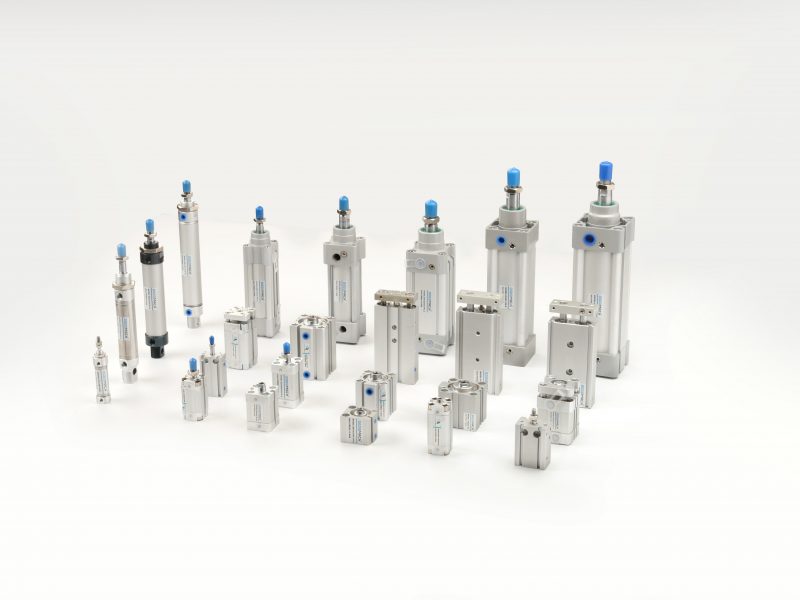
Knowledge Content Related to Cylinder Switch
The cylinder switch provides a robust and cost-effective interface between the cylinder and the electrical control system. Using advanced magnetic induction technology, these switches are designed for use in cylinders with magnets in the cylinder piston. They can be used to provide cylinder position indications, cycle counts or to confirm operations. This article will mainly introduce the knowledge content related to cylinder switch.
Cylinder switches are used as part of pneumatic equipment control systems. Pneumatic equipment uses high-pressure condensed air to create motion in mechanical equipment. The durability of the machine is also one of the key driving forces, and the commanded start and stop motion points of the cylinder are less than the full stroke of the cylinder, making the cylinder more durable.
Although different types of cylinder switches operate differently, they all serve the same purpose, which is to allow the cylinder to be integrated into an automation system. These switches detect the position of the cylinder and send a signal to the control system.
Type of cylinder switch
Use cylinder switches to verify completed motion, coordinate multiple actuators, count cycles, or just confirm operation. Using a “timing algorithm” is a good idea, but if airflow drops, or some other unexpected event causes the cylinder to delay or stop, with a cylinder switch, the unit can always cycle as fast as possible without worrying about unwanted motion or mechanical conflict.
Cylinder switches are typically used at the end of cylinder travel to signal the completion of a specific movement. These signals are usually fed back to a PLC (or other controller) to provide cylinder position indications, cycle counts, or to confirm operations. It is also possible to use the cylinder switch in the middle of the stroke for more complex operations.
In the boxing example on the right, the cylinder switch is used to confirm the telescopic stroke of both cylinders. If cylinder B is not fully retracted before cylinder A is extended, a crash will occur; cylinder switches are used to prevent this.
Types of cylinder switches: There are many different types of cylinder switches, including actuators, pneumatic relays, solid state and reed switches. Some types have LED (Light Emitting Diode) indicators. The type of switch may affect the rated voltage and voltage drop, so it should be selected according to the requirements of the device.
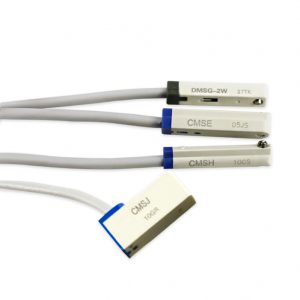
Cylinder switch reed type
A reed switch is a magnetic proximity sensor that “turns on” when an axially aligned magnetic field is applied to it. The poles of the axially aligned magnets are adjacent to each other in the axial plane. When an axially aligned magnet approaches a reed sensor, a magnetic field parallel to the reed switch is created.
Reed switches consist of a pair of ferromagnetic metal reeds enclosed in a hermetically sealed glass tube. In the absence of a magnetic field, the metal reeds will be separated and the reed switch will toggle “off”. The reed switch will turn “on” when the cylinder piston passes the switch and applies a strong enough magnetic field to attract the reeds together.
Cylinder reed switches have magnetic proximity sensors that open when an aligned magnetic field is applied. The poles of the aligned magnets are adjacent to each other in the axial plane. When a magnet approaches a reed switch, it creates a magnetic field parallel to the reed switch. A reed switch consists of a pair of ferromagnetic metal reeds enclosed in a sealed glass tube.
In the absence of a magnetic field, the metal reeds separate and the sensor turns itself off. When used with a cylinder, a reed switch is mounted on the cylinder tube to detect the presence of the magnetic field generated by the magnet on the cylinder piston. This action draws the metal reeds together, signaling the circuit to turn on the magnetic sensor.
The article mainly introduces the relevant knowledge of the cylinder switch, browse the article to learn about the use of the cylinder switch to verify the completed movement, coordinate multiple actuators, calculate the cycle or just confirm the operation. Using a “timing algorithm” is a good idea, but if airflow drops, or some other unexpected event causes the cylinder to delay or stop, with a cylinder switch, the unit can always cycle as fast as possible without worrying about unwanted motion or mechanical conflict.
At length, if you have any question about pneumatic cylinders or other pneumatic products, please feel free to contact us.
You can view and learn more about our products through our official website.