

Different Types of Pneumatic Mechanical Valve
Mechanical valves are known as directional control valves, and they’re divided into three types based on two numbers: 3/2-way, 5/2-way, and 5/3-way. The first number represents the number of ports, while the second represents the number of positions. Mechanical and manual actuated pneumatic valves regulate compressed air flow to connected units in pneumatic control systems.
Pneumatic valves can divided into two categories, pneumatically actuated valves and directional control valves. The first one is a device that regulates the flow of air in a pneumatic system. The second is a mechanism that controls the valve itself with compressed air, while the media inside the system might be anything from liquid to gas. This article discusses the numerous types of pneumatic control valves that can be controlled mechanically or manually.
Ports and positions of mechanical valve
3/2-way:Three ports (input, output, and exhaust) and two positions make up a 3/2-way valve. It’s applied for a single action cylinder with a spring return that requires a single action to extend. The valve returns to its normal, non-actuated position once the spring retracts the valve rod.
5/2-way: A 5/2-way valve contains five ports (input, two outputs, and two exhausts) as well as two positions. They’re applied in which continuously move between two positions, such as extending and retracting double action cylinders.
5/3-way: A 5/3-way valve contains five ports (input, two outputs, and two exhausts), as well as three positions (blocked center, open center, or pressure center). All ports are blocked if the valve is in the first position. The outlets are connected to their corresponding exhaust ports by the open center. The pressure center connects the intake to both outlets, allowing two actions to be performed simultaneously, such as extending two cylinders at the same time.
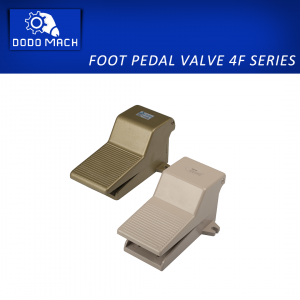
Foot pedal mechanical valves
The end-user can control other pneumatic devices in a system remotely by employing pneumatic foot pedal mechanical valves; for example, they can operate pneumatic cylinders that keep workpieces in place for hands-free working. Workpieces are held in position by latching foot pedal pneumatic valves; reapplying pressure on the pedal releases the hold. Dosing, pushing, punching, and drilling are examples of repetitive functions performed by spring return versions.
The valve returns to its original position when the pedal pressure is relaxed. The following are some of the benefits of foot-operated pneumatic valves: Operation is carried out without the use of one’s hands. Heavy-duty complete metal versions with floor mountings are available for use in areas where light-weight designs would fail.
Roller-operated mechanical valves
Pneumatic roller lever valves are used in automated systems to mechanically sense the position of parts. This occurs when moving pieces travel over the rollers, causing the valve to open. Friction is decreased since the wheel can revolve with the moving element, reducing abrasion on the pneumatic roller lever valve and the connected component. They’re frequently employed to obtain pneumatic cylinder strokes, door or barrier closures, or identify the correct arrangement of components before a machine starts up.
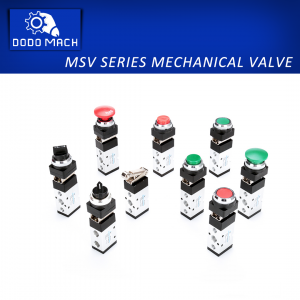
Button–activated mechanical valves
Other pneumatic devices in a system are signaled by a pneumatic push-button valve. They can be controlled by a push-button, key switch, mushroom button, rotary switch, safety button, or tumbler switch, among other actuator kinds. Each of these button kinds has its own set of benefits:
Push-button: A latch button for long-term operations, a veiled button for safety, or a push and hold button are all examples of this sort of actuator.
Mushroom button: A mushroom button has a broad contact area that extends outside the panel’s surface, making it simple to activate with the hand. It’s useful for repetitive procedures where a strong button is required.
Rotary switch: To activate or deactivate the valve, an operator must turn a switch.
Key switch: This type is activated by turning a key.
Tumbler switch: A basic actuator that works in the same way as a light switch.
Safety button: The mushroom button is the most common type of safety button, as it allows for speedy activation.
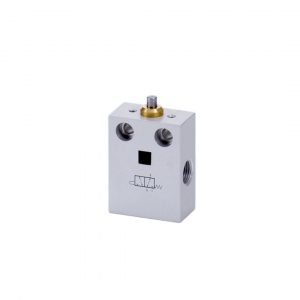
Pneumatic stem actuated valves
Machine automation systems frequently use pneumatic stem actuated valves to sense the location of moving parts. The valve is opened when a moving item pushes against the plunger. The pneumatic stem actuated valve is frequently used as a limit switch for closing doors or barriers at the conclusion of a cylinder’s stroke, or to test the appropriate alignment of components prior to machine operation.
Compared to other valves, stem actuated valves have various advantages: It’s little and light. The stem only needs a little amount of motion to actuate, making it ideal for situations where just a small amount of movement is required. And vacuum applications are possible with some designs.
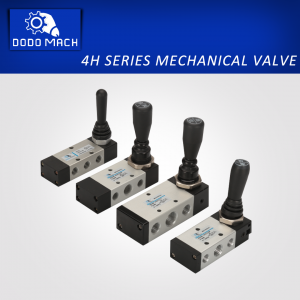
Hand lever mechanical valve
Pneumatic hand lever mechanical valves can be used to manually turn on and off air supplies. They’re commonly utilized to regulate cylinders in pneumatic systems or to send signals to other equipment. Using this sort of valve has a number of advantages: User-friendly. The hand lever makes operation simple for operators. Because of its small and compact design, it can be used for a wide range of pneumatic applications. Durability is ensured with a metal or plastic casing.
At the end, if you have any question about our pneumatic valves or other pneumatic products, just feel free to contact us for more information.
You can view and learn more about our products through our official website.